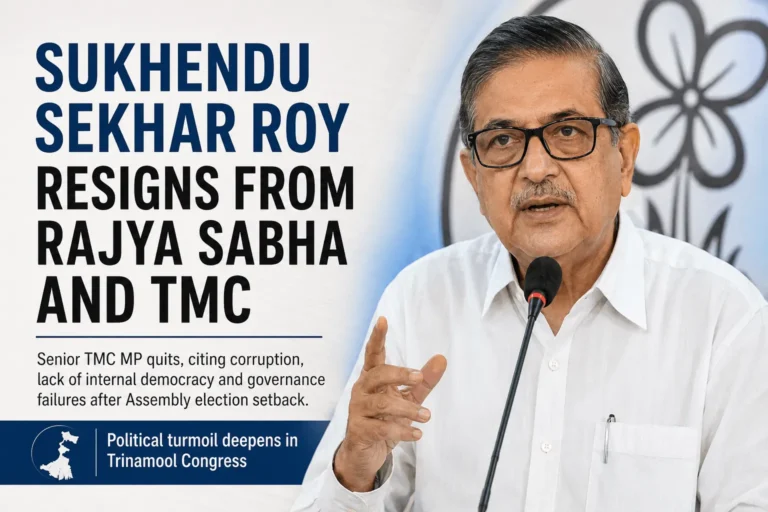
Sukhendu Sekhar Roy Resigns from Rajya Sabha and Trinamool Congress, Deepening TMC Crisis
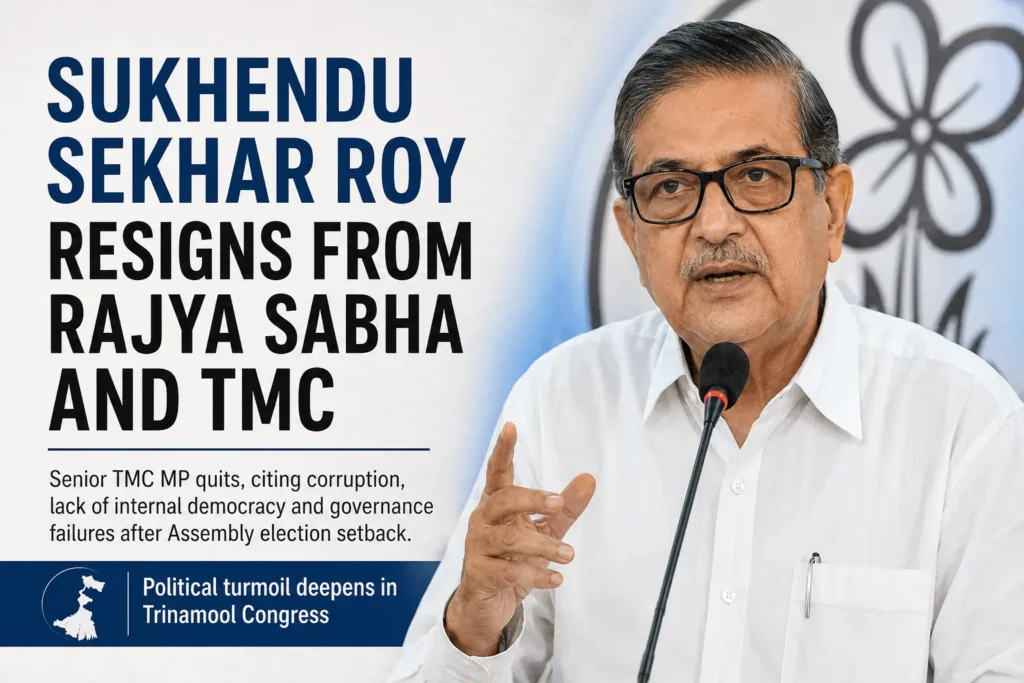
Kolkata, June 8, 2026: In a major political development that could further destabilize the Trinamool Congress (TMC), senior party leader and Rajya Sabha MP Sukhendu Sekhar Roy has officially resigned from both the Upper House of Parliament and the Trinamool Congress.
The resignation comes in the aftermath of TMC’s disappointing performance in the 2026 West Bengal Assembly elections and has intensified speculation about growing unrest within the party. Political observers believe Roy’s departure could trigger additional resignations from dissatisfied MPs and leaders.
Senior TMC Leader Quits Amid Growing Internal Dissent
Sukhendu Sekhar Roy, one of the most prominent voices within the Trinamool Congress, had openly criticized the party’s leadership following its electoral setback. He repeatedly raised concerns about alleged corruption, governance failures, and the absence of internal discussions regarding the party’s future direction.
Speaking to reporters in New Delhi, Roy said there was no proper platform within the party to discuss critical political and social issues.
“Many legislators no longer believed the party was moving in the right direction. There was no forum to discuss important political matters,” Roy stated.
His resignation marks the first departure of a Trinamool Congress Member of Parliament since the party’s defeat in the 2026 Assembly elections.
Sharp Criticism of TMC Leadership
In his resignation statement, Roy delivered a scathing assessment of the party’s governance record.
According to him, the people of West Bengal expressed a lack of confidence in the Trinamool Congress due to persistent allegations of corruption, law-and-order failures, violence against women, and poor administration across sectors such as education, healthcare, industry, and employment.
Roy argued that the election results reflected public dissatisfaction with the party’s performance and called for serious introspection—something he believes never happened after the defeat.
Rebellion Within Trinamool Congress Intensifies
Roy’s resignation comes at a time when the Trinamool Congress is already facing significant internal challenges.
Reports suggest that around 60 rebel MLAs have backed the selection of a new Leader of the Opposition in the West Bengal Assembly, highlighting deep divisions within the party ranks.
The development has fueled speculation that additional MPs and senior leaders could distance themselves from TMC in the coming weeks, potentially leading to a larger political crisis.
Earlier Differences with Party Leadership
Roy had previously expressed dissatisfaction with the party’s handling of several sensitive issues, including the shocking rape and murder case involving a doctor at Kolkata’s R.G. Kar Medical College and Hospital.
At the time, he actively participated in protests and publicly criticized the administration’s response. These actions reportedly led to his marginalization within the party, although relations were later partially restored.
Despite those efforts, growing differences over governance and organizational functioning appear to have ultimately led to his resignation.
Sukhendu Sekhar Roy’s Political Journey
Before joining the Trinamool Congress, Sukhendu Sekhar Roy was associated with the Congress party and was known to be close to former President Pranab Mukherjee.
His parliamentary career includes:
- Rajya Sabha Member since 2011
- Deputy Leader of TMC in Rajya Sabha until 2019
- Chief Whip of Trinamool Congress in Rajya Sabha until 2024
- One of the party’s most experienced parliamentary strategists
His departure represents a significant loss of experience and institutional knowledge for the Trinamool Congress.
What Roy’s Resignation Means for West Bengal Politics
Political analysts believe Roy’s resignation could be a turning point for the Trinamool Congress as it struggles to maintain unity after its electoral defeat.
With internal rebellion already visible among legislators and growing dissatisfaction among senior leaders, the party leadership now faces the difficult task of preventing further fragmentation.
Whether Roy’s move remains an isolated incident or becomes the beginning of a larger exodus could significantly shape the future political landscape of West Bengal.
About the Author